
From Meghalaya’s Fields to Better Markets: How TARAM is Transforming Agricultural Quality Assessment
Harini
Empowering Meghalaya’s Agricultural Value Chain with TARAM
Meghalaya has long been known for its unique agricultural landscape, where diverse crops and traditional farming practices thrive across its hills. Spices such as ginger, turmeric, black pepper and chilli form an important part of this agricultural ecosystem, supporting livelihoods while offering significant opportunities for value addition and wider market access.
Among these, Lakadong turmeric has gained particular recognition for its distinctive quality and market potential. We have explored its journey, challenges and opportunities in detail in our blog, “Lakadong Turmeric: The Golden Spice of Meghalaya & How Technology Can Unlock its True Potential.” But the opportunity extends much more beyond a single crop.
The Challenge: Quality at the Point of Origin
For agricultural commodities, quality is one of the most important factors determining market value. Yet, quality assessment often happens away from where the produce is grown. Traditional laboratory testing can involve time, transportation, cost and logistical challenges. For farmers and aggregators operating across Meghalaya's geographically challenging terrain, accessing timely quality information can be particularly difficult.
This creates a gap between what farmers produce and what the market is able to recognise and reward.When quality information is not readily available, farmers may have limited visibility into the actual value of their produce, while buyers and processors may face challenges in obtaining consistent quality data for procurement and decision-making.
Moving Quality Assessment Closer to the Farm
This is where technology can make a meaningful difference.
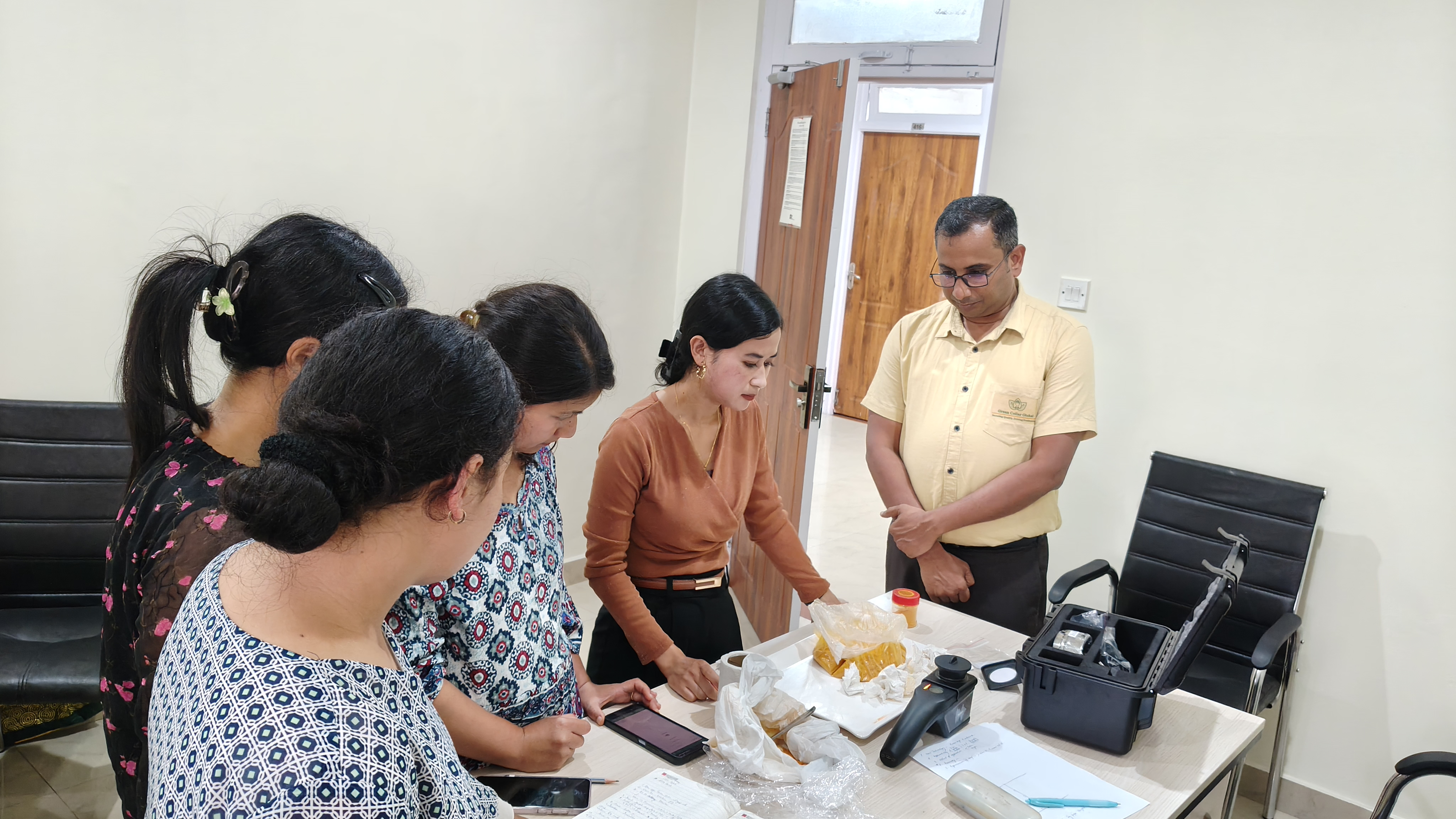
Green Collar Global, in partnership with the Meghalaya Basin Management Agency (MBMA), is deploying TARAM-an AI-powered, portable quality assessment platform designed to bring rapid quality insights directly to the field.
Instead of moving samples long distances to access quality information, TARAM enables assessment closer to the farm, collection centre and point of aggregation. This can help stakeholders make faster and more informed decisions around quality, aggregation, pricing and market linkages.
We sincerely appreciate the GOVERNMENT OF MEGHALAYA and MBMA for their progressive approach towards technology adoption and their continued efforts to strengthen the state’s agricultural ecosystem.
We are also proud to see Make in India innovation being adopted to address real challenges in Indian agriculture. Initiatives such as these demonstrate how government, technology companies and local ecosystems can work together to take advanced technologies from laboratories into the hands of people who can benefit from them.
From Data to Better Decisions
The value of technology is not simply in measuring a parameter but lies in what that information enables people to do. For farmers and producer groups, timely quality insights can support better aggregation and negotiation. For aggregators and buyers, accessible quality data can help improve procurement decisions and transparency. For the wider value chain, digital quality information can contribute to more efficient and traceable agricultural systems.
In this way, quality data can become a bridge between farm-level production and market-level value.
A New Chapter for Meghalaya’s Agriculture
The deployment of TARAM with MBMA represents an important step in Meghalaya's journey toward more technology-enabled, transparent and value-driven agriculture.
Meghalaya already has the natural resources, unique crops and farming communities that create the foundation for a strong agricultural economy. The next opportunity is to strengthen the systems that connect those resources to markets.
At Green Collar Global, we believe technology should not replace agricultural knowledge, it should strengthen it.
By bringing quality intelligence closer to where agricultural decisions are made, TARAM aims to help create a future where farmers have better information, markets have greater transparency, and quality can translate into greater value.
From Meghalaya's fields to global markets, the future of agriculture is not just about producing more - it is about knowing, proving and unlocking the value of what is produced.